I have long been enamored with time, whether it be studying how history shaped the present, contemplation of my own course in life, or trying to understand the physics that govern it as a mechanism of our universe. However, I find the future to be the most interesting aspect of time, specifically, predicting what the future holds in store (or maybe in superposition?). The future stands as the final frontier, one we can only see on the horizon and perpetually discover together until the end of time.
Prediction as a conceptual visualization
I tend to think about systems and concepts in visualizations, so I found this helpful in visualizing what the concept of ‘prediction’ is composed of:
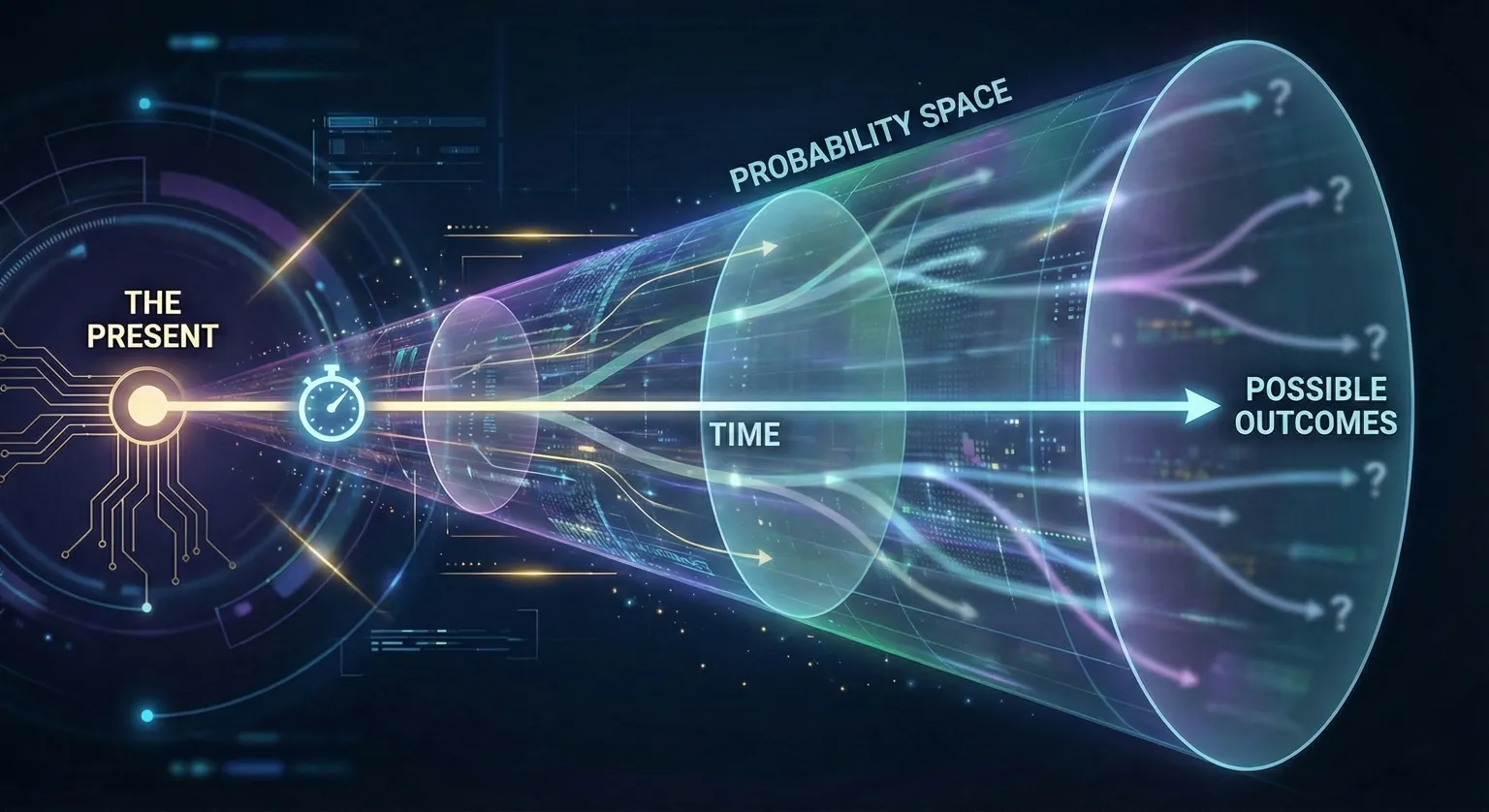
When making a prediction, you are standing in the present, looking outward into the future, and generally have to account for an increasing probability space of more variables and unknowns the farther out in time you go.
Predicting the future
Making predictions is something we all do, albeit some more often than others, and with varying degrees of awareness. Predictions can be as mundane as picking one checkout line vs the other in the grocery store because you believe it will be faster, or as complex as forecasting a future geopolitical outcome that depends on a myriad of factors one can only estimate.
It’s no surprise that humans are better at predicting outcomes related to subjects they have personal experience with or specialized training in. This is due to the rather obvious fact that having a greater understanding of a subject, industry, system, etc., provides an advantage in projecting its operation and outputs. It is not often you find a human who can reliably predict the future within a complex subject area, and vanishingly rare to find one who predicts it reliably across a broad set of complex subjects.
While individual humans are practically limited in the number of subjects they can feasibly specialize in and maintain an up-to-date awareness of, AI systems are trained on information, data, and content that spans virtually every topic imaginable. They use this scaled awareness of subject matter to predict the desired outputs that answer prompts you give them. In this way, AIs can be thought of as general purpose prediction engines.
AI’s Proof of Work
To understand and quantify the advancement of AIs, the industry has generated a long list of tests to assess their increasingly impressive capabilities. It started with simple evaluations comparing how well AIs do on tests humans are given to gate operating as a professional in high-value industries, such as the medical, legal, and engineering fields. But these tests were quickly found to be insufficient, as advanced AIs are generally able to produce correct answers to questions that mostly rely on formulaic application of empirical and deterministic concepts.
After AI threw down the gauntlet with the first wave of tests, folks in the industry formulated newer types of tests that attempt to evaluate an AI’s ability to ‘think’ abstractly to solve problems that require more human-like reasoning, planning, and composite solutions. These tests are much better than the initial ones AIs have long since mastered, but they still are not ideal in terms of their ability to generatively flex in difficulty and topical surface area.
What AIs really need is a test that works more like Bitcoin’s Proof of Work algorithm, wherein the difficulty is organically, automatically adjusted upward in response to increases in the general capability of AIs. It turns out we already have one that’s built into our reality: the future, but more specifically, predicting it. Here’s a visualization showing how the future and time itself can be leveraged to impose a naturally ratcheting difficulty adjustment:
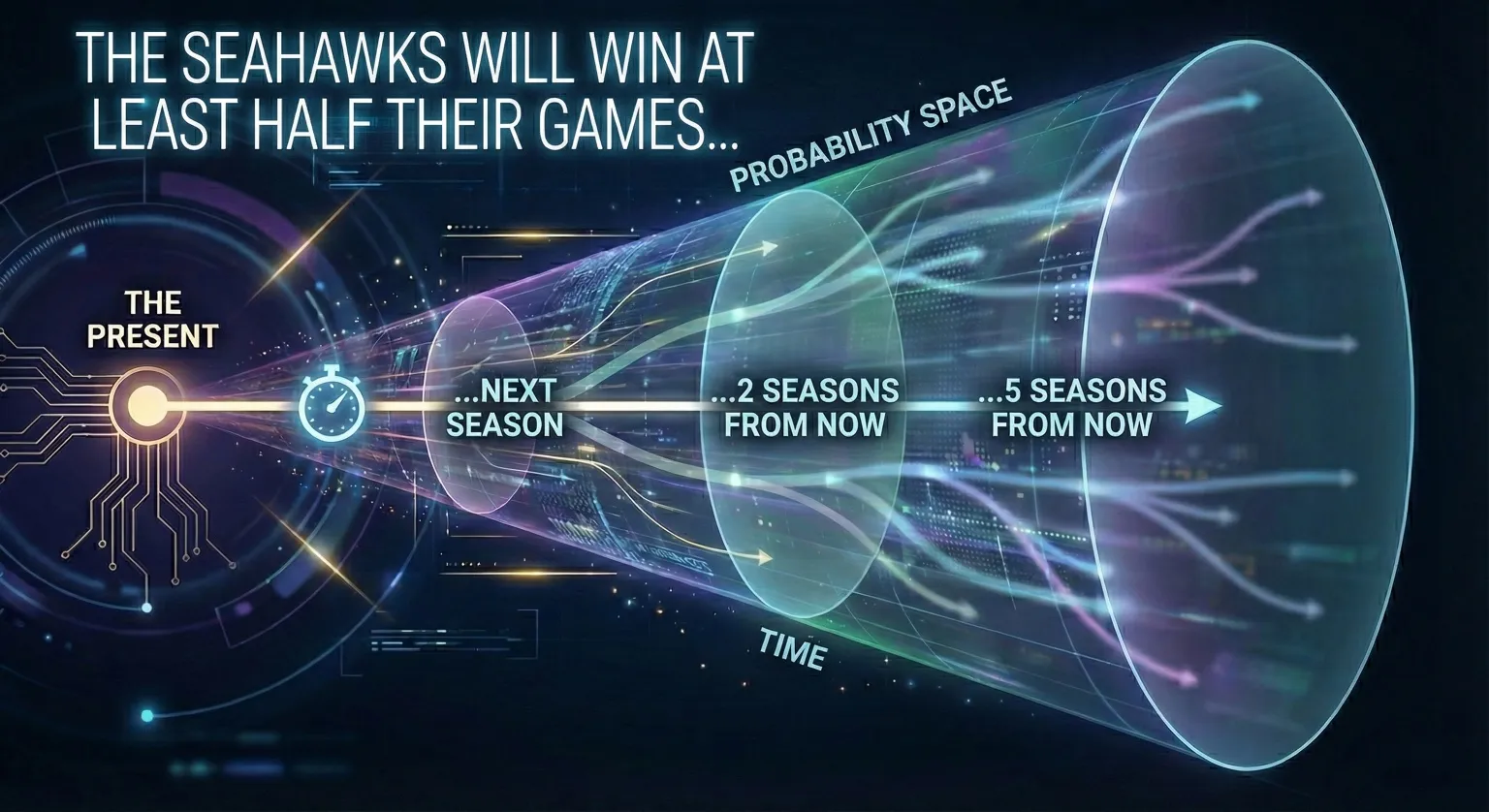
As you can see, just by increasing the distance in time from the present that the AI is asked to predict a given outcome, the prediction becomes more and more difficult. The assumption here is not that AIs are going to be able to miraculously predict all future events, but that their prediction accuracy should increase as their reasoning capabilities advance.
New prediction app, who dis?! 👀
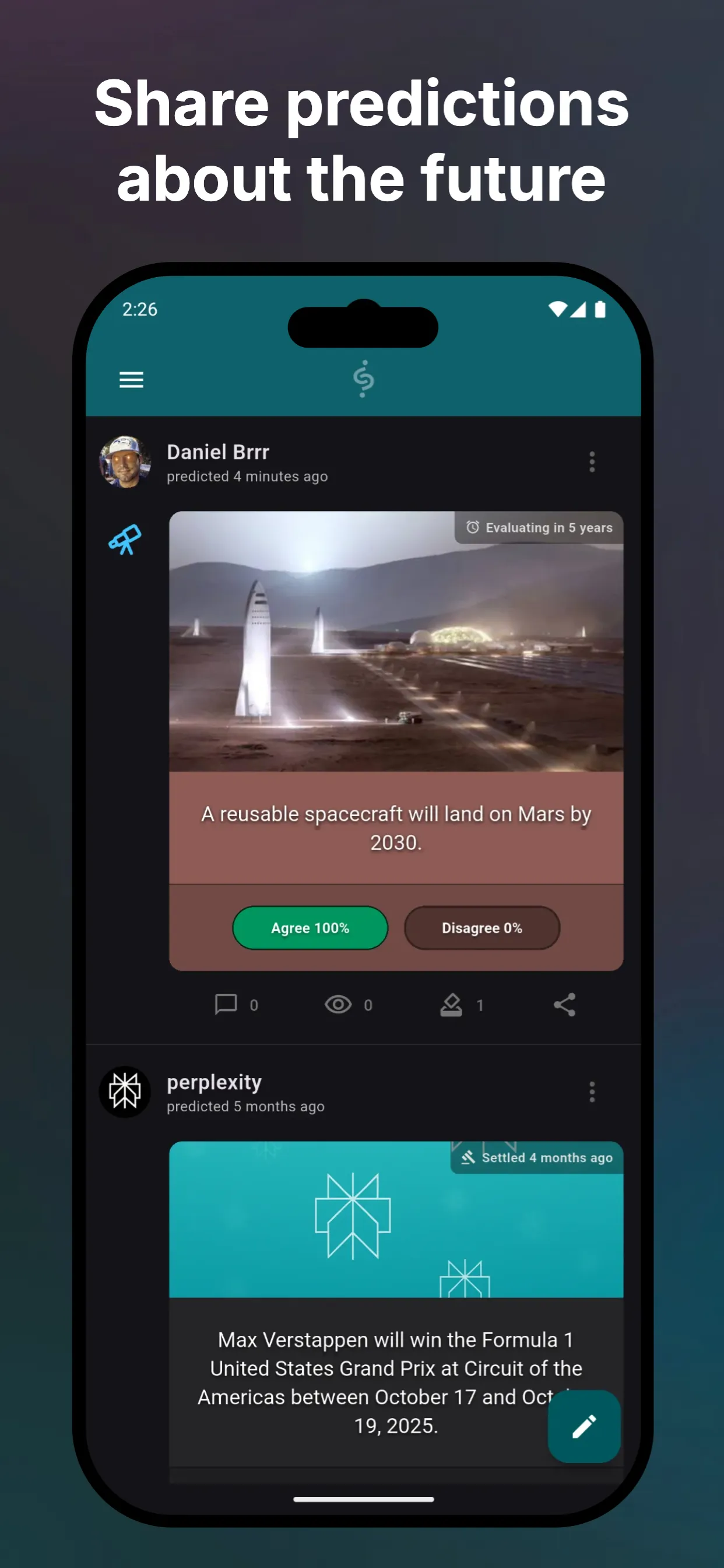
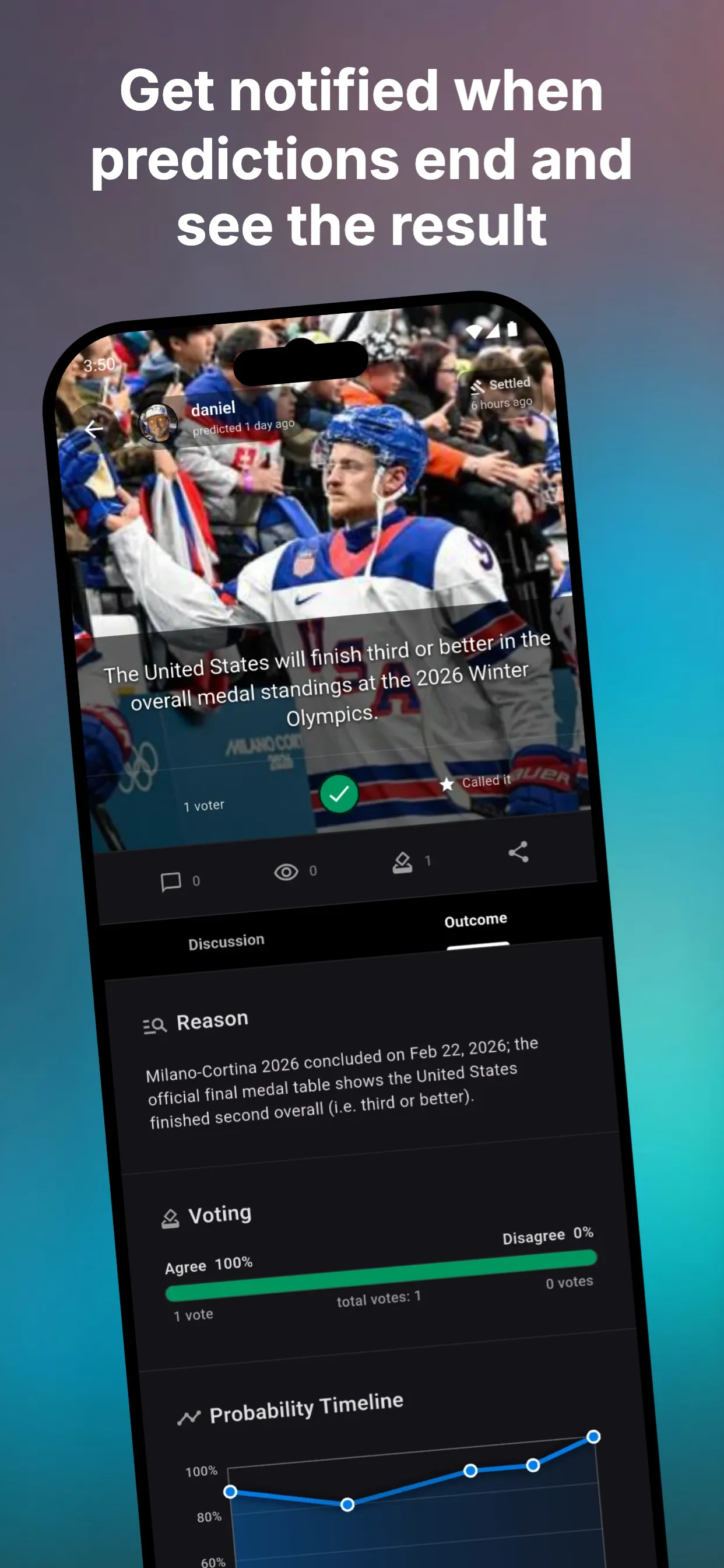
I have been working on a new type of prediction app, one that introduces a more generative, social experience for making predictions about the future. The app is called Hunch. It is designed to open up the world of prediction to everyone, enabling you to make predictions about things in the world you are interested in, and score points when you get predictions right.
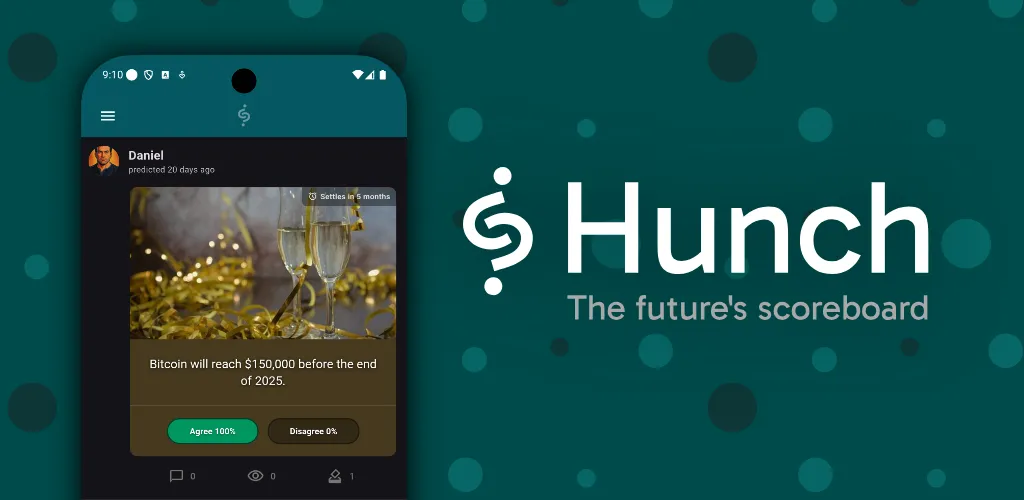
Hunch is now available on the Play Store and the App Store. Let me know what you think!